Give exceptions and unresolved questions a named owner, a next step, and a realistic reply time.
Mitra Team · 3 min read
A regular customer asks whether you can do Saturday for the same price as last time. Whoever answers says, “I’ll check.” Two days later the customer calls again. The original note recorded the question, but nobody took responsibility for the answer. This is the point where a call-handling process needs a handoff.
Define the decisions that need you
List the requests that require judgment: a pricing exception, a complaint about previous work, an unusual booking, or a commitment outside normal service. Give the person answering a clear boundary and the details you need to decide.
For the Saturday request, those details might be the service, preferred time, earlier quote reference, and callback number. “Customer wants a discount” loses context. Preserve the actual question.
Route | When it can help |
|---|---|
Message with an owner | A decision can wait for review |
Live conversation | The decision-maker is available |
Agreed callback | Both parties need time to talk |
Existing email channel | Documents or photos are needed |
Make a promise someone can keep
Choose who owns the answer and when they will review it. Use a callback window only when that person has agreed to it. “Lena will review this and contact you” is more accurate than promising this afternoon when Lena is away.
Suppose Lena handles pricing exceptions and reviews them at four. Her colleague collects the question and records it for that review. Lena responds with an answer or a specific next step. If more information is needed, she explains what is missing and sets a new expectation.
Mitra can answer incoming calls and provide summaries and transcripts for reviewing these questions. Joining a live call is an option only when supported and someone is available. Keep a message-and-callback route for calls that cannot be resolved live.
Close the loop after the decision
Record when the customer heard back and whether anything remains open. If you cannot decide by the promised time, acknowledge the delay and agree on the next update. An update helps, but it does not complete the original request.
Avoid asking callers to repeat the whole story at every handoff. Read the existing notes first, then ask only for the missing detail.
Check where questions stall
Review unresolved requests once a week. Which ones have no owner? Which missed their reply window? Which callers had to chase an answer? Fix the step where responsibility became unclear before adding another notification or inbox.
Common questions
Should staff make some of these decisions themselves?
If appropriate, define the decisions and limits they can handle. Review recurring exceptions to see whether your policy needs clarification.
What if the caller insists on speaking immediately?
Offer the routes actually available. Don’t promise a live handoff to someone who cannot take the call.
Read next: covering calls during customer appointments.
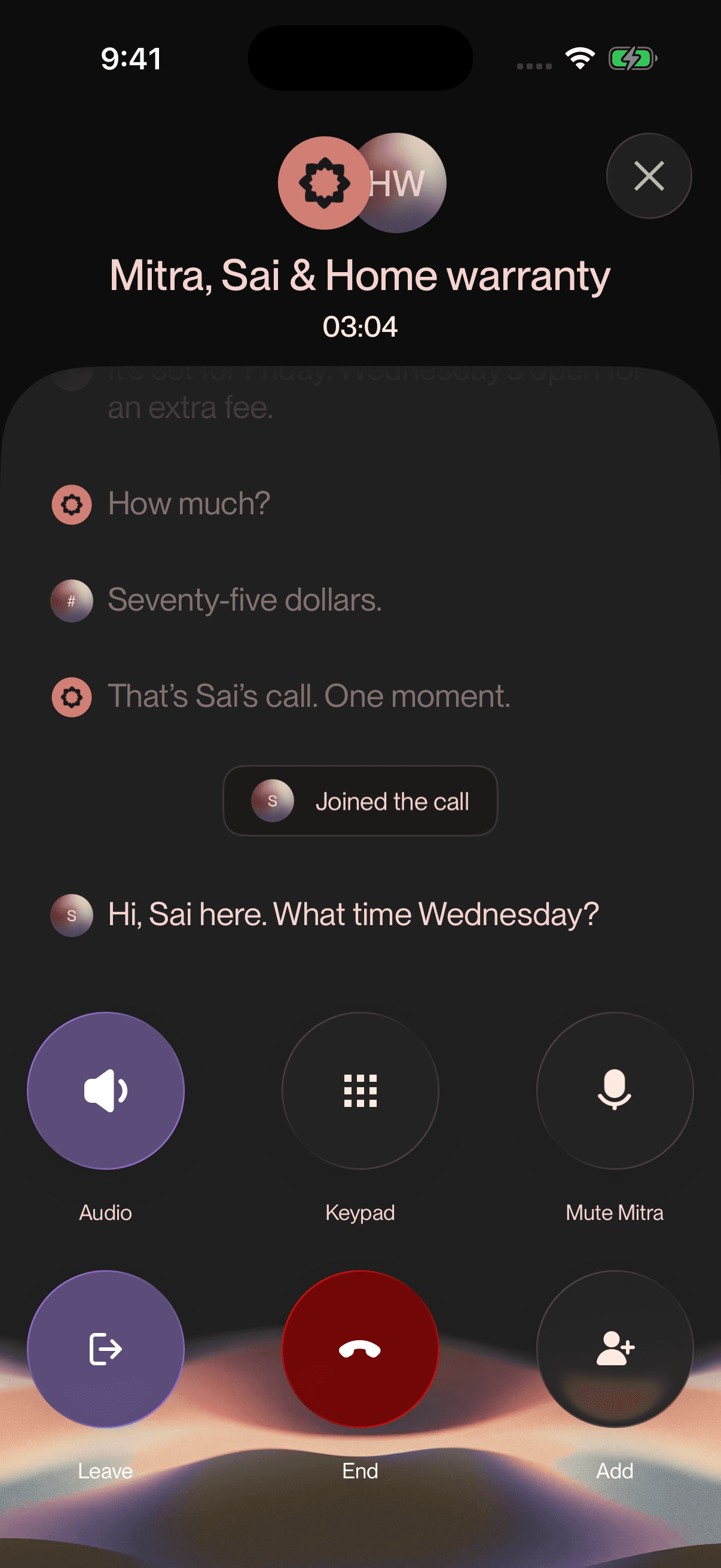
The real Mitra iOS live-call interface, using a staged demo conversation. Here, the user joins to make a decision about an appointment fee.